
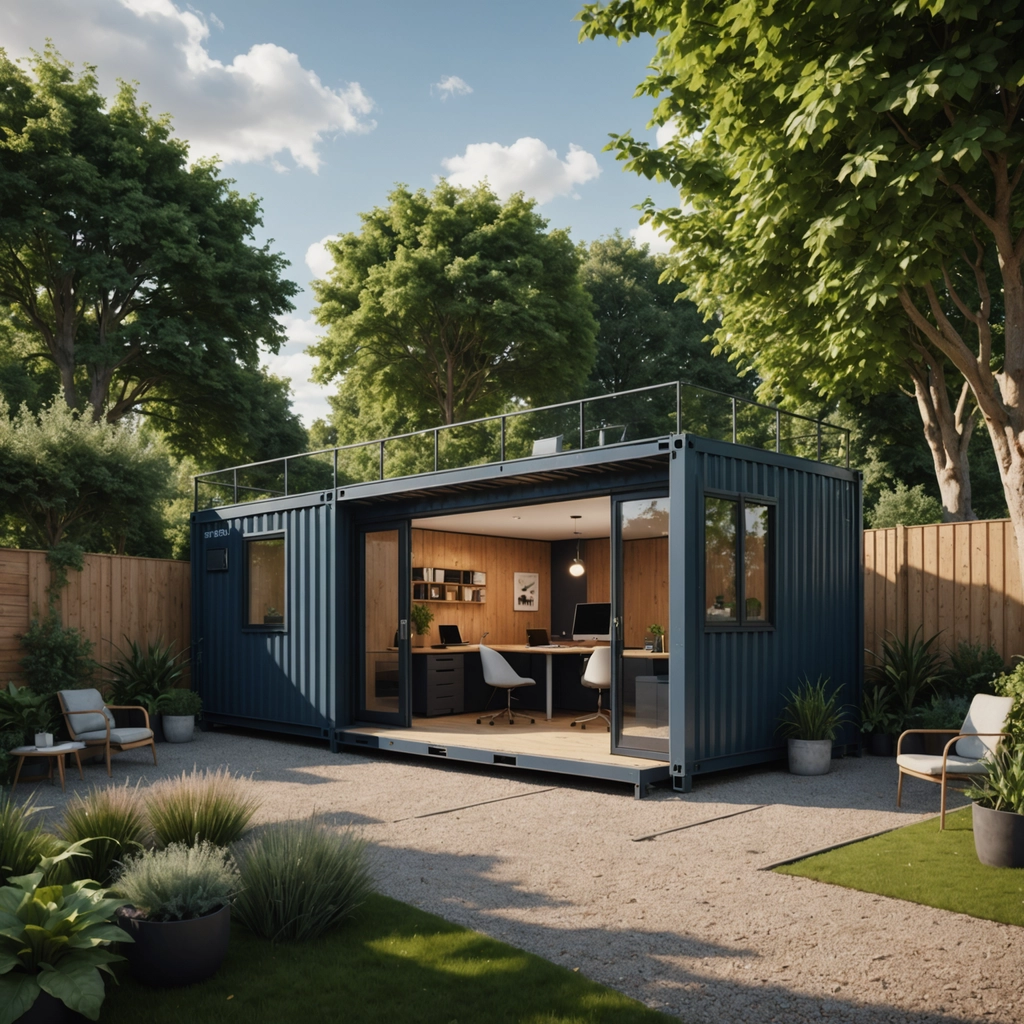
When you don’t have room indoors — or you’re constantly fighting distractions — creating a workspace in the garden can completely change how you work. One of the most innovative and design-forward ways to do this is by converting a shipping container into a dedicated home office. With thoughtful planning, a simple steel structure can become a modern studio that feels private, calm and incredibly inspiring. Giving you a workspace that’s close enough to home for convenience, yet separate enough to offer real focus.
A Strong Architectural Foundation
A shipping container already has an appealing, linear structure, but the transformation begins with refining the exterior. Many people choose a matte black or deep charcoal finish because it instantly gives the container a contemporary, architectural feel. Others soften the industrial look with timber cladding, which adds warmth and helps the office blend more naturally into a garden setting. Even a slim deck or step outside the entrance can change how the space feels, creating a sense of arrival each time you step into your workspace.
Letting Natural Light Do the Heavy Lifting
Since containers are enclosed and narrow, natural light is one of the most important elements in transforming the space. Large windows, full-height doors or even a skylight can completely alter the atmosphere, making the interior feel bigger, brighter and far more welcoming. Glazing also creates a visual connection to the garden, which helps the workspace feel open rather than boxed in. When the light is right, even a compact container feels surprisingly airy.
Insulation and Interior Comfort
For a container to function as a year-round office, proper insulation is essential. Spray foam or insulated panels are commonly used, followed by timber cladding, plasterboard or smooth microcement to give the interior a clean, finished appearance. Once insulated and lined, the container feels no different from a high-quality room inside the house — only quieter and more private.
Electrical wiring, heating and ventilation are integrated at this stage. Most people connect the office to the main house supply using a buried armoured cable installed by a qualified electrician. Inside, a small fuse board powers sockets, lighting, and any heating or cooling system you choose. Slimline radiators, underfloor heating or compact climate-control units all work well in a container because the space heats efficiently. Good ventilation — whether through trickle vents, openable windows or a small extractor fan — helps prevent moisture build-up and keeps the air fresh.
Planning Permission: What You Need to Know
Whether or not you need planning permission for a shipping container office depends largely on your country and local authority rules, but the general principles are quite similar across many regions.
In many cases, a garden office can fall under an exempt or “permitted development” category if it meets certain conditions — typically relating to height, size, and where it sits on your property. However, shipping containers can sometimes be viewed differently from standard garden rooms because they begin life as a temporary structure, even if they are being converted into a permanent one.
It’s important to check the following:
- Location: Garden structures behind the house are usually treated more leniently than those placed at the front or side.
- Use: If the office is for personal work rather than running a business with regular visitors, permission is often easier.
- Size and height: Staying within standard garden building limits usually helps avoid formal planning.
- Appearance: A well-designed container clad in timber or a sympathetic material is more likely to be accepted than one left in industrial condition.
If you live in a conservation area, are planning something particularly large, or expect client traffic, checking with your local planning office early in the process is worthwhile. Even when permission isn’t required, it’s always better to confirm before you start the build.
Creating a Space That Works for You
Once the structure and utilities are complete, the focus shifts to designing a workspace that feels both functional and beautiful. Because the footprint is small, furniture should be simple and well-considered. A modern desk, an ergonomic yet stylish chair, a clean task light and a small shelf or two are often all that’s needed. The real magic comes from keeping the space intentionally minimal — an edited selection of items creates clarity and calm.
Texture adds warmth to the modern shell. A wool rug, linen curtains, ceramic vases or a soft throw immediately soften the interior and give it character. Plants work especially well in container offices, bringing life and colour without overwhelming the small footprint.
A Place to Break, Reset and Think
One of the most underrated aspects of a garden office is the ability to step away from your desk and truly switch off for a few minutes. Many people include a small armchair or bench where they can sit with a coffee, read or take breaks throughout the day. These moments of rest are often more restorative in a garden office than in a busy home, simply because the space is designed for clarity.
Welcoming Clients or Visitors
If you work with clients, a shipping container office can become an impressive and professional meeting space. A café-style table, a pair of chairs or a slim bench along one wall is often enough to host conversations comfortably. The separation from the main house gives visitors privacy and avoids the awkwardness of home-life overlap. Even a small amount of thoughtful styling — a framed print, a plant, or a couple of curated books — makes the space feel polished and intentional.
Costs: What You Can Expect to Spend
The price of converting a shipping container varies widely depending on the size, level of finish and complexity of the design. A basic used container often starts around €2,500–€5,000, while new or high-grade units cost more. Ground preparation and foundations can add another €500–€2,000 depending on access and soil conditions. Glazing is usually one of the most significant investments, ranging from €1,500 for simple windows to €6,000 or more for full-height glass doors.
Insulation, interior walls and flooring typically fall between €1,500 and €4,000. Electrical installation may range from €800 to €2,000 depending on how far the office sits from the house. Heating or cooling can add €400 to €2,000, and furnishings vary depending on taste. Altogether, a realistic total sits anywhere between €8,000 on the low end to €25,000 for a high-quality, design-led finish. Architectural builds with premium glazing and bespoke interiors can cost more, but most people find excellent results in the mid-range.
How Long the Process Takes
A typical project takes between four and eight weeks from start to finish. Preparing the site, cutting openings and reinforcing the structure usually takes a couple of weeks. Insulation, electrical work and interior finishing take another two to three weeks, and the final touches — painting, flooring and furnishing — finish the project. Many factors influence the timeline, including weather, contractor availability and how bespoke the design is, but the process is relatively fast compared to traditional extensions.
A Garden Office That Transforms the Way You Work
Renovating a shipping container into a garden workspace creates something more than just a room to work in. It becomes a calm retreat, a creative studio, a private space where you can think clearly and work without interruption. With thoughtful design, practical planning and a few well-chosen details, a simple container can become one of the most enjoyable and inspiring places in your home — even though it sits just outside it.