
Collagen is one of the most talked-about supplements today, credited with everything from smoother skin to stronger joints and healthier hair. But collagen isn’t a single ingredient — it’s a family of proteins that behave differently depending on their structure, source and how the body uses them. Understanding these differences makes it easier to choose a collagen supplement that actually supports your goals. Here’s a clear look at what collagen does, what the science really says, and the various types available.
What Collagen Actually Is
Collagen is the most abundant protein in the human body, forming the structure of skin, bones, cartilage, tendons, ligaments and even blood vessels. Think of it as the body’s scaffolding: strong, flexible, and crucial for maintaining firmness and elasticity.
As we age, collagen production naturally slows, and existing collagen fibres become fragmented. This leads to visible signs of aging — fine lines, wrinkles, loss of firmness — as well as less obvious symptoms like stiffer joints or slower recovery from exercise.
Collagen supplements aim to support the body by providing small, easily absorbed collagen peptides that may stimulate new collagen formation or reduce the breakdown of existing collagen.
How Collagen Works in the Body
Oral collagen doesn’t travel directly to your skin or joints intact. Instead, it breaks down into small peptides and amino acids that act as signals. These signals tell cells — particularly fibroblasts in the skin — to produce more collagen, elastin and hyaluronic acid.
This signalling effect is the main reason collagen supplements can influence skin quality or joint comfort. They support the environment needed for collagen synthesis and slow the rate of degeneration associated with aging, stress, UV exposure and inflammation.

Type I Collagen — The Beauty & Skin Collagen
Type I is the most abundant collagen in the body and the primary type found in skin, hair, nails and bones.
It’s the collagen most associated with:
- improved skin elasticity
- smoother texture
- increased firmness
- reduced fine lines
Marine collagen, derived from fish skin or scales, is almost exclusively Type I, and is highly bioavailable because of its low molecular weight.
Best for: skin firmness, hair strength, nail growth, overall beauty benefits.
Type II Collagen — The Joint & Cartilage Collagen
Type II collagen makes up the bulk of cartilage, the cushioning tissue that protects joints. It behaves differently from Type I and is especially valued in joint-health supplements.
Research suggests that Type II collagen peptides may support:
- improved joint comfort
- reduced stiffness
- healthier cartilage
- mobility during exercise or aging
It is usually sourced from chicken sternum cartilage rather than marine or bovine protein.
Best for: joint pain, cartilage support, mobility, active lifestyles.
Type III Collagen — The Support Collagen
Type III often coexists with Type I in skin and connective tissues but plays a distinct role in elasticity and structure. It supports organs, blood vessels and the extracellular matrix (the body’s internal network of support fibres).
When combined with Type I, it creates a fuller, more balanced collagen supplement for beauty and skin health.
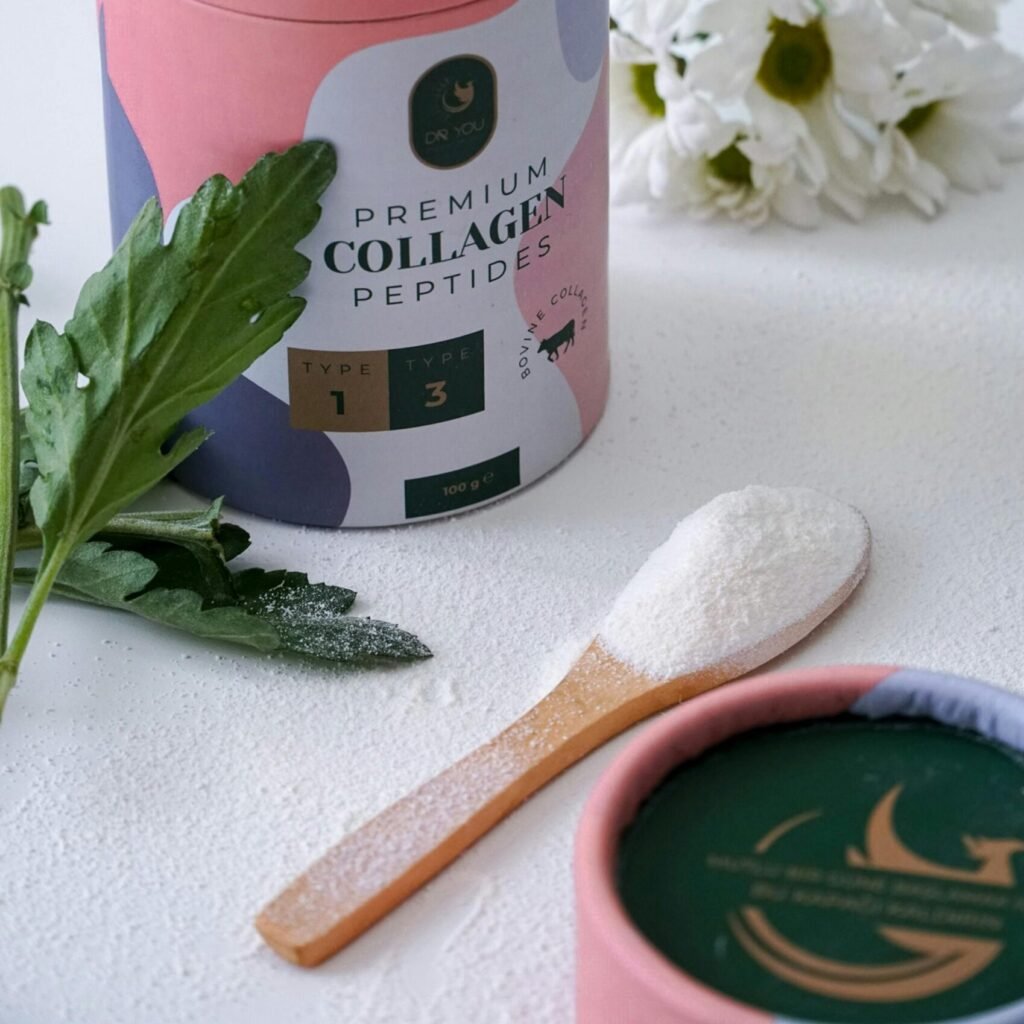
Bovine collagen typically contains both Type I and Type III.
Best for: skin elasticity, gut lining integrity, vascular health.
Hydrolysed Collagen Peptides — What Most Supplements Actually Are
Most collagen on the market is “hydrolysed collagen” — meaning the protein has been broken down into small peptides that are easier to absorb.
Hydrolysed collagen can contain Type I, II or III depending on its source, but the key feature is bioavailability. The smaller the peptides, the easier the uptake.
Marine collagen has the smallest peptides; bovine collagen is slightly larger, but often more affordable and contains multiple collagen types.
What Collagen Can Actually Do (Based on Research)
Consistent use — usually 8 to 12 weeks — can support:
Skin:
Improved hydration, elasticity and firmness; reduction in wrinkle depth; stronger dermal structure.
Joints:
Reduced joint pain and stiffness, especially during movement; better recovery from exercise.
Hair & Nails:
Stronger nails with fewer breakages; improvement in hair thickness and resilience (often due to better amino acid availability).
Gut Health:
Some emerging research suggests collagen may help support the integrity of the gut lining, although evidence is still developing.
Collagen isn’t a miracle, but it’s one of the few supplements with solid evidence for both aesthetic and functional benefits.
Marine vs Bovine vs Chicken Collagen — Which Should You Choose?
Marine collagen:
Rich in Type I; highly bioavailable; ideal for skin, hair, nails.
Best for beauty-focused benefits.
Bovine collagen:
Contains Type I and Type III; broader benefits for skin and internal connective tissues.
Best all-rounder.
Chicken collagen:
Primary source of Type II collagen.
Best for joint support and cartilage repair.
Each source has its place depending on your goals.
Final Thoughts
Collagen is not a single ingredient but a complex structural protein that behaves differently depending on its type and source. Marine collagen supports skin’s youthful architecture; bovine collagen offers broader connective-tissue benefits; and Type II supplements help maintain healthy joints. When taken consistently, collagen peptides can help the body rebuild what time naturally degrades — offering a subtle but meaningful boost in skin vitality, joint comfort and overall resilience.